
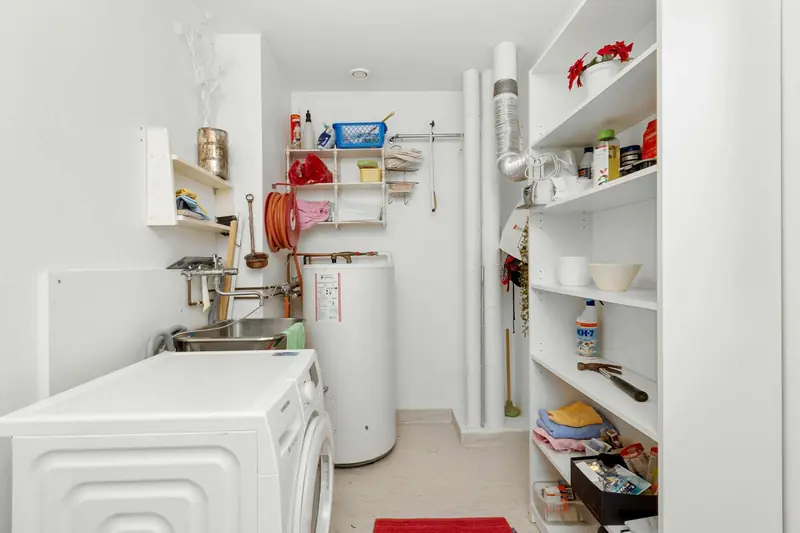
A water heater’s useful life depends on its design, water quality, installation, maintenance, household demand, and operating conditions. Age is useful context, but condition and performance are better reasons to decide whether a unit needs service or replacement.
Typical lifespan by water-heater type
Many conventional tank water heaters serve roughly 8 to 12 years, while well-maintained units may last longer or fail sooner. Tankless equipment can often remain in service longer because there is no stored-water tank, but heat exchangers, valves, sensors, and other components still require maintenance and can fail. Heat-pump and indirect systems have their own service requirements.
Find the model and serial number on the rating plate and consult the manufacturer to identify the production date, warranty, and recommended maintenance. Do not rely on age alone.
Signs the unit needs professional evaluation
- Water around the tank: a leaking connection may be repairable, but water from the tank body often indicates internal failure.
- Rust-colored hot water: corrosion, sediment, or piping may be involved and should be diagnosed.
- Unusual popping or rumbling: mineral sediment can interfere with heat transfer and create noise.
- Less hot water: a heating element, burner, thermostat, dip tube, scale, or increased demand may be responsible.
- Temperature changes: controls or mixing components may not be operating correctly.
- Repeated repairs: frequent failures can make replacement more practical than continued component replacement.
Repair or replace?
A qualified professional should consider the source of the problem, equipment age, tank condition, repair cost, efficiency, available parts, warranty coverage, installation compliance, and the household’s current hot-water needs. A young unit with a replaceable control or heating element may be a reasonable repair. An older tank leaking through its body generally requires replacement.
Maintenance that supports reliability
Follow the manufacturer’s instructions for inspection and maintenance. Depending on the system and local water, this may include checking the anode rod, flushing sediment, servicing tankless scale buildup, testing safety controls, keeping combustion air paths clear, and inspecting the vent and drain pan. These tasks can involve hot water, pressure, fuel, or electricity, so use a qualified technician where required.
Choosing a replacement
Correct sizing matters. A unit that is too small may not meet peak demand, while an oversized unit can cost more than necessary. Compare fuel availability, first-hour rating or flow rate, efficiency, installation requirements, space, electrical capacity, venting, maintenance, and total operating cost. Local codes and permit requirements also apply.
For more information, visit MaxRooter’s pages about water-heater repair, maintenance, and tankless water heaters.