
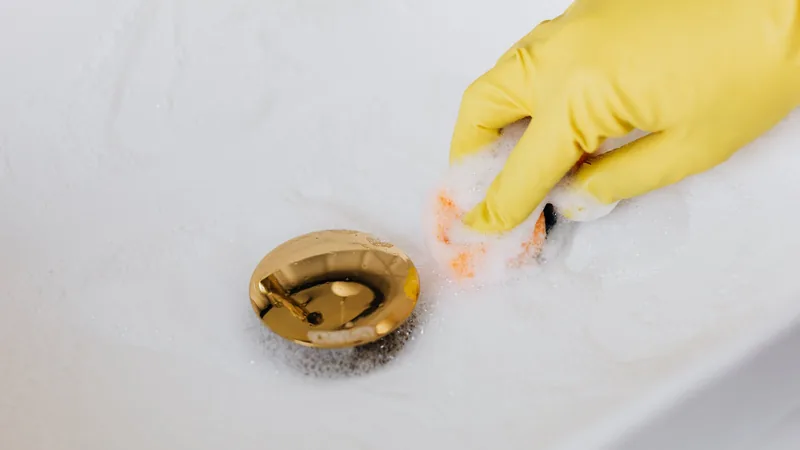
Most drain clogs form gradually. Grease, soap residue, hair, food particles, and other debris collect inside the pipe until water can no longer pass freely. A few consistent habits can reduce blockages and help you notice a developing problem before it becomes an overflow.
Protect kitchen drains from grease and food
Cooking oil, fat, and grease may enter a drain as liquid but cool and cling to the pipe. Collect them in a container and dispose of them according to local guidance. Wipe greasy cookware with a paper towel before washing it. Use a sink strainer to catch food scraps, and empty the strainer into the trash or compost.
Even when a garbage disposal is installed, feed small amounts gradually while running cold water. Avoid fibrous peels, bones, coffee grounds, eggshells, and large quantities of starchy food. Continue the water briefly after grinding so waste travels through the branch drain.
Control hair and soap in bathrooms
Fit removable hair screens over shower, tub, and vanity drains. Clean them frequently instead of waiting for water to slow. Brush hair before showering when practical, and do not flush wipes, cotton products, dental floss, or hygiene products—even when packaging describes an item as flushable.
Use laundry and utility drains carefully
Lint, pet hair, and debris from heavily soiled clothing can collect in laundry plumbing. Clean the machine’s filter as directed by its manufacturer and consider a lint catcher where appropriate. Never pour paint, mortar, soil, chemicals, or mop debris into a utility sink without confirming that disposal is permitted and safe.
Respond to early warning signs
Slow drainage, gurgling, recurring odors, and water appearing in one fixture when another is used can signal a developing blockage or venting problem. A clog that repeatedly returns after basic cleaning usually needs diagnosis rather than stronger chemicals.
Safe routine maintenance
- Remove and clean accessible strainers and stoppers.
- Flush only normal wastewater and approved toilet paper.
- Check under sinks for drips, corrosion, or poorly aligned traps.
- Have persistent slow drains inspected before they become fully blocked.
- Ask about camera inspection when multiple fixtures or the main line are affected.
When professional drain cleaning makes sense
Call for help when several drains are slow, sewage is present, a blockage repeatedly returns, or basic removal of accessible debris does not restore flow. A professional can determine whether the cause is local buildup, root intrusion, pipe damage, improper slope, or a main-line obstruction. Mechanical cleaning, hydro jetting, or camera inspection should be selected for the pipe condition rather than used automatically.
Prevention will not eliminate every clog, particularly in older or damaged systems, but it reduces avoidable buildup and provides more time to address warning signs. Learn more about MaxRooter’s drain cleaning service connections.